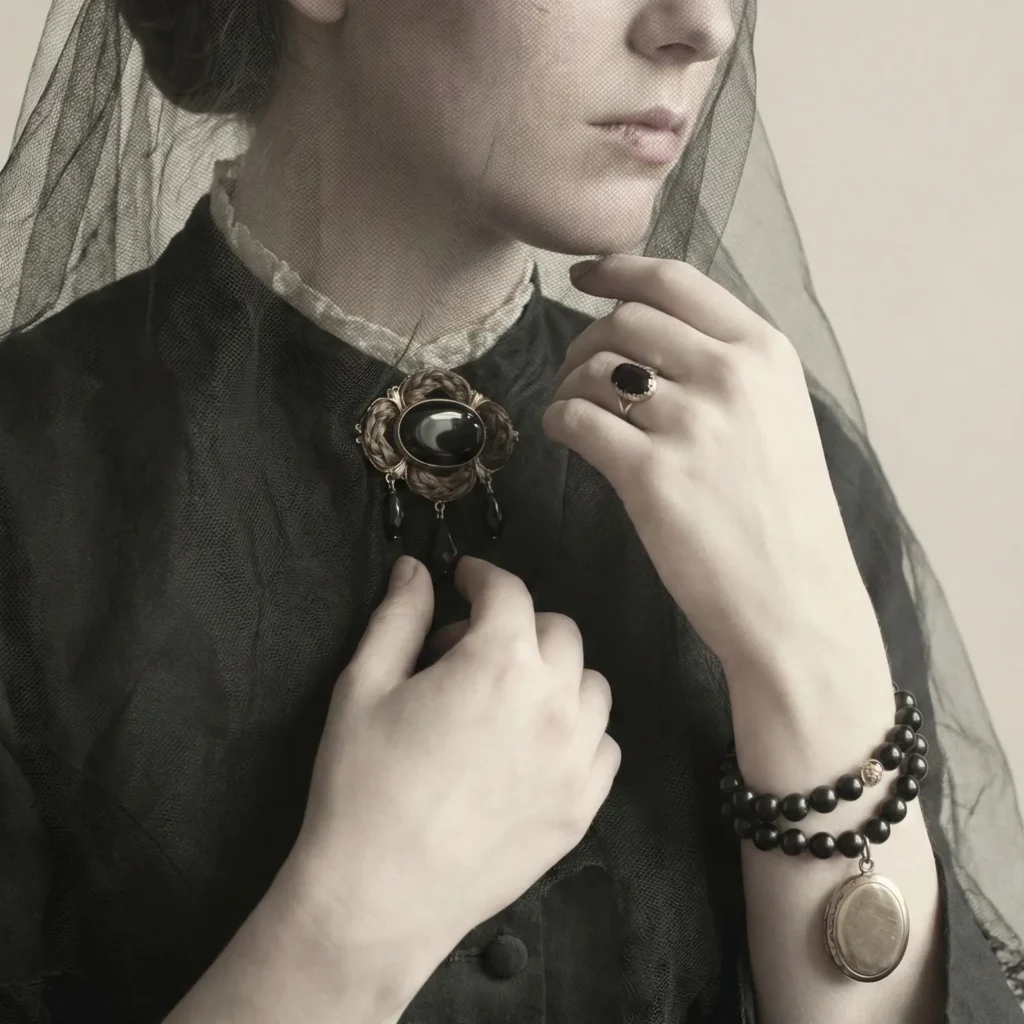
When people picture a wedding, they imagine joy, celebration, and optimism. In 18th- and 19th-century England, however, the story was layered with a strikingly different detail. Brides were often adorned not only with glittering new ornaments but also with mourning jewellery, pieces that spoke of loss and remembrance. A ring might enclose a lock of a grandparent’s hair, a brooch might be carved from black Whitby jet, or pearls might be arranged to symbolise tears. Far from macabre, these objects served a clear purpose: they carried family memory into a new marriage, linking ancestry to continuity.
To modern readers, this practice may feel paradoxical. Yet within Georgian and Victorian society, the union of Grief and matrimony was both logical and symbolic. Mourning jewels satisfied the demand for public displays of respect, demonstrated family status, and reinforced dowry traditions that combined inheritance with sentiment. Their story offers insight into how people once managed the tensions between death, wealth, and love—and why these jewels still resonate today.

A culture defined by Grief
In Georgian and Victorian England, death was omnipresent. Infant mortality was high, epidemics frequent, and funerals regular features of community life. Houses of mourning were instantly recognisable, with mirrors draped in black cloth and door handles tied with crepe to signal a death inside. The fear was not of death itself but of failing to mourn correctly. Families who neglected mourning rituals risked social humiliation.
Women played a central role in this culture. They were expected to embody Grief through dress, manner, and jewellery. A strict timetable of mourning dictated what colour of black fabric was appropriate, how long each stage should last, and what accessories could be worn. Jewellery provided a portable, visible sign of Grief that both expressed devotion and satisfied society’s demand for public respectability.
The culture of mourning became institutionalised after the death of Prince Albert in 1861. Queen Victoria retreated into permanent mourning, wearing black until she died in 1901 and keeping Albert’s image close at all times. Her example transformed a private response into a public obligation, spreading strict codes across every social class. As a result, mourning jewellery was no longer optional—it became a necessary marker of identity, respect, and continuity.
Materials and symbolism
The power of mourning jewellery lay in its deliberate symbolism. Every substance, colour, and design element carried meaning that was instantly recognisable to contemporaries.
| Material | Physical properties | Symbolic meaning |
| Jet | Black, lightweight, fossilised wood | Solemn Grief, appropriate for deepest mourning |
| Onyx | Deep black, glossy | Quiet dignity and sorrow |
| Black enamel | Opaque, deep black | Mourning for a married individual |
| White enamel | Opaque, pure white | Purity, loss of a child or an unmarried person |
| Seed pearls | Small, lustrous beads | Tears of sorrow |
Hair was one of the most intimate materials incorporated. Since hair does not decay, it was thought to preserve the essence of the deceased, offering a lasting bond between the living and the dead. Victorian women often learned hairwork at home, weaving strands into wreaths or braids for lockets. Professional artisans also operated, though the demand was so high that fraud sometimes occurred, with substitutes like horsehair used in place of the genuine article.
Motifs and their messages
Designs in mourning jewellery carried a clear shift across the centuries. Georgian pieces reflected stark memento mori traditions, using skulls or hourglasses to remind the wearer of mortality. By the Victorian era, these gave way to softer, more romantic imagery—angels, weeping willows, and forget-me-nots—that honoured personal loss rather than universal death.
| Motif | Symbolic meaning |
| Skulls, coffins, hourglasses | Reminder of mortality, fleeting life |
| Urns, weeping willows | Grief and remembrance |
| Forget-me-nots | Enduring love and devotion |
| Clasped hands | Unity and fidelity beyond death |
| Eye portraits | Intimate, anonymous tokens of self |
| Oak leaves and acorns | Longevity, continuity, new beginnings |
This evolution marks a shift from philosophy to sentimentality. A bride inheriting such a jewel was not given a grim token but a poetic emblem of family loyalty, ideally suited to her transition into a new household.
Dowries as bridges of wealth and heritage
The dowry system framed marriage as both a personal and financial transaction. It ensured that a woman entered her union with assets that secured her position and, if necessary, provided for her independence. Dowries often contained silverware, linens, and coins, but jewellery was central, both for its intrinsic value and its symbolic role as a carrier of heritage.
A “hope chest” might be filled over many years, accumulating practical household goods alongside treasures of emotional weight. Displaying these items publicly at wedding festivities was customary, showing both the bride’s inheritance and the family’s honour and mourning jewellery fitted naturally into this process. It demonstrated financial investment in fine materials, while also signalling continuity across generations.
Probate records confirm that mourning rings and brooches were frequently specified in wills. This legal recognition elevated them from temporary keepsakes to permanent heirlooms. For example, one widow explicitly divided her “death’s head ring” and her wedding ring between her daughters, underscoring the dual significance of sentiment and value. Such documents make clear that mourning jewels were not incidental but core components of inheritance systems, destined to enter dowries.
The paradox resolved
To the modern eye, mourning ornaments on a wedding day might appear contradictory. Yet in their historical context, they fulfilled multiple roles at once. They embodied wealth, carried family memory, and satisfied society’s demand for propriety.
By fastening a mourning jewel, a bride symbolically brought her ancestors into her marriage. She was declaring continuity, showing her community that she carried both material inheritance and family devotion into her new household. Far from clashing with her bridal attire, the jewel acted as a seal that bound the past to the future.
Fun fact: The popularity of eye portrait miniatures in the late Georgian period created such demand that entire workshops specialised in painting just one expressive eye, often without identifying the sitter. This anonymity made them both mysterious and intensely personal.
Modern echoes
The decline of elaborate mourning customs began in the late 19th century. Reformers criticised excessive expense, and the First World War, with its overwhelming scale of death, made public ritual impractical. Grief became more private, conducted in funeral parlours rather than family homes.
Despite this shift, the human desire to preserve memory through objects endured. Today, antique mourning jewels command strong interest among collectors and buyers of antique rings, heirloom jewellery, and bespoke commissions. Their value lies not only in craftsmanship but in the narratives they embody.
Contemporary memorial jewellery continues the tradition in new ways. Artisans now craft rings and pendants incorporating cremation ashes, fingerprints, or even digital elements. Like their Victorian predecessors, these creations are not accessories but vessels of love and legacy, designed to carry memory into the future.
A timeline of mourning and change
The broader history of mourning jewellery shows its enduring role across centuries.
| Period | Cultural attitude towards death | Mourning rituals and jewellery |
| Medieval | Sober religious contemplation of mortality | Rings with skulls and inscriptions |
| 18th century (Georgian) | Grief as public obligation | Mourning jewellery with urns, weeping willows |
| 19th century (Victorian) | Cult of Grief, sentimental remembrance | Hairwork, pearls as tears, strict etiquette |
| Early 20th century (Post-WWI) | Private mourning replaces public ritual | Decline of formal customs |
| 21st century (2025) | Revival of heritage and narrative | Antique heirlooms and modern memorial designs |
This timeline highlights both continuity and change. The symbols may evolve, but the emotional drive remains constant.
Conclusion: the enduring legacy of mourning jewellery
The presence of mourning jewellery in bridal dowries of 18th and 19th-century England was neither strange nor contradictory. These pieces embodied wealth, sentiment, and tradition, ensuring that the bride carried her family’s story into her new life. Their symbolism united love and loss in one object, making them powerful tokens of continuity.
In today’s market, where buyers seek jewels with story and substance, these traditions resonate strongly. Antique mourning pieces are prized for their authenticity, while modern memorial jewellery continues to answer the human need for tangible remembrance. As the saying goes, “What is remembered, lives.” In jewellery, memory is not only preserved but worn, ensuring that stories of love and legacy endure across generations.
Continue Reading
Newsletter
Stay updated on Hatton Garden Jewellers news