When someone comes to a fine jewellery consultation, they often know what they want: maybe an oval, emerald, or princess shape. In London, this decision can feel urgent, whether it’s for a proposal, a family event, or just the pressure to get it right without spending too much. But one of the most common mistakes happens right at the start. Many people use the words “cut” and “shape” as if they mean the same thing, but they actually describe different features. This leads to confusion. A shopper might think they’ve picked a diamond for its sparkle, but they’ve only chosen its outline. Or they might focus on a trendy shape and overlook the details that make a diamond look bright or dull in everyday light.
This is especially important for engagement rings and expensive jewellery, where small differences in proportions can affect how a diamond looks, hides flaws, and keeps its value. In the industry, cut quality is a technical skill, whileshape is a design choice. They are connected, but not the same. Knowing the difference helps you buy with confidence and avoid overpaying for the wrong thing.
What Diamond Shape Means and Why It Is Not Cut
The diamond shape is the outline you see when looking at the stone from above. It’s the basic silhouette: round, square, rectangular, oval, or pear. Shape is about geometry, and it’s influenced by personal taste, fashion trends, and the natural shape of the rough diamond.
Many buyers don’t realise this. A cutter might pick an oval or marquise shape if the rough diamond is long, to get the best yield. A more regular-shaped crystal might be cut into a square. But these choices don’t tell you how well the diamond will reflect light after it’s cut.
Part of the confusion comes from how people talk about diamonds. Shoppers often say “oval cut” or “emerald cut” when they actually mean oval shape or emerald shape. In the industry, these terms are kept separate. Reports describe the shape and the cutting style (like an oval with brilliant faceting), while “cut” refers to how well the facets and proportions are made.
What Diamond Cut Means and What It Controls
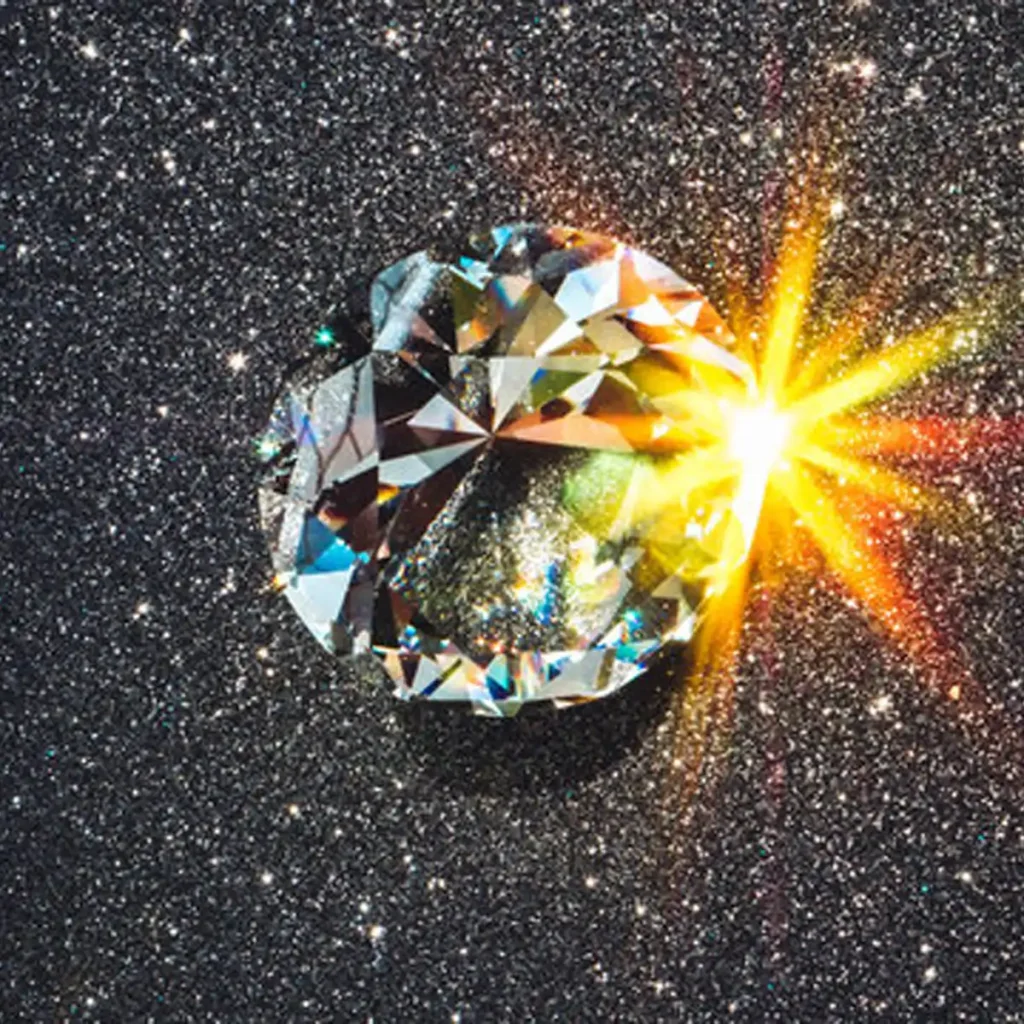
Diamond cut is about the three-dimensional design of the stone—the facets, angles, and proportions that control how light moves inside. Cut covers things like the angles between the top and bottom, the size of the flat top, the overall depth, symmetry, and how smooth the surface is.
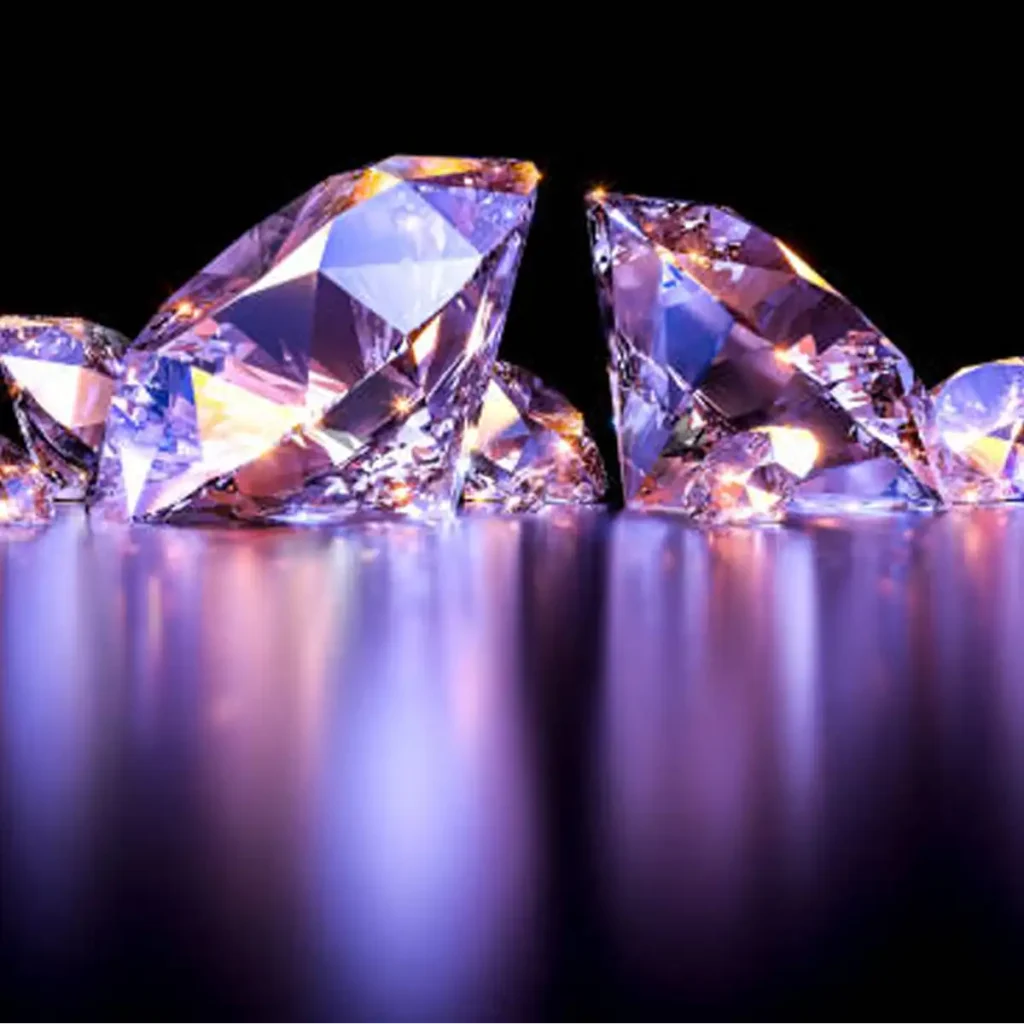
Any diamond shape can be cut well or badly. Just choosing a shape doesn’t guarantee sparkle. If the cut is poor, light escapes from the bottom or sides, making the diamond look dull or dark. If the cut is good, light bounces back to your eye, making the diamond look bright and lively.
In trade language, cut quality is often called the “make”. In the trade, cut quality is often called the “make.” A good make usually means the cutter gave up some weight to make the diamond look better. It is usually because the cut has balanced 3 optical effects.
Brightness is the return of white light. Diamond has a high refractive index (about 2.42), but it still needs the right pavilion geometry to keep light bouncing inside rather than escaping. Too shallow, and light exits through the bottom. Too deep, and light can leak through the sides after internal reflections.
Fire is the splitting of white light into spectral colours. Crown facets act like prisms. The relationship between table size and crown angle is central here. Steeper crown angles can increase fire, sometimes at the expense of brightness, because the path of light changes.
Scintillation is the pattern of flashes and contrast as the stone, light source, or observer moves. Symmetry and polish matter heavily. A diamond can have strong brightness but still look messy if facet alignment is poor and contrast is uneven.
If you remember one thing, it’s this: shape gives you the outline you want, but cut decides how well that outline shines.
Proportions, Symmetry and Polish Are the Mechanics of Cut Quality
Cut quality rests on 3 practical pillars that can be assessed and compared.
Proportions describe how the table size, total depth, crown height, pavilion depth, and girdle thickness relate to one another. These measurements determine whether a diamond effectively returns light or leaks it.
Symmetry is the precision of facet placement and alignment. Misalignment can redirect light away from the viewer. Trade professionals separate meet point symmetry (how accurately facet junctions meet) from optical symmetry (how evenly light returns).
Polish is the surface finish. Poor polish can leave microscopic lines that scatter light at entry and soften brilliance.
A diamond might look nice in shape,e but still disappoint if these basics aren’t strong.
Why Diamond Cutting Became a Science
Diamond cutting started as surface polishing. Early point cuts retained the natural octahedral form and offered little brilliance. Table cuts appeared when the top point was ground flat to allow some light entry. Rose cuts developed with a domed top and flat base, often maximising weight from flatter rough but lacking the internal reflections of modern styles.
The big change came when cutters started using more systematic faceting and designed the bottom of the diamond to capture light. Years of experimenting led to today’s advanced cutting methods.
The 1919 Breakthrough That Changed Cut Quality Forever
In 1919, Marcel Tolkowsky published mathematical work on diamond design, calculating angles intended to balance brilliance and fire for the round brilliant. His model defined a benchmark approach: do not cut only for weight, cut for light.
His proposed proportions included 58 facets and target crown angles around 34.5 degrees and pavilion angles around 40.75 degrees. Later research accepted that a range of proportions can still perform at the top level, but the point remains. Cut quality became something that could be measured, tested, and improved, not just admired.
This history also explains why “cut” and “shape” became separate ideas. Shape is the outline you see, while cut is the design that makes that outline shine.
Fun fact: Marcel Tolkowsky’s work in 1919 helped change diamond cutting from focusing on weight to aiming for the best light performance, setting the benchmark for cut grading. Its symmetry allows predictive modelling across 360 degrees, and the industry has spent decades standardising what “excellent” performance looks like.
GIA introduced a formal cut grading system for standard round brilliants in 2005, built on large-scale observation and proportion analysis correlated with perceived beauty. The assessment includes factors such as brightness, fire, scintillation, weight ratio, durability, polish, and symmetry.
That’s why buyers are often told to focus on the quality of round brilliant-cut stones. It’s the shape with the clearest and most agreed-upon grading standards.
The 2 Visual Failures That Reveal Bad Cut Fast
If a diamond’s proportions are off, the difference in appearance can be dramatic.
A shallow stone can show a fisheye effect, where light passes through rather than reflecting internally, ly and a grey ring can appear under the table.
A deep stone can show a nailhead effect, where the centre appears dark because light is leaking out rather than in. These issues aren’t about shape—they’re about cut. You can spot them in both round and fancy shapes, especially when cutters try to keep more carat weight.to preserve carat weight.
Why Fancy Shape Diamonds Are Harder to Grade for Cut
Everything that is not round is treated as a fancy shape: oval, pear, princess, emerald, cushion, marquise, and more. The key consumer mistake is assuming these shapes carry the same cut grade as rounds.
In this landscape, some reports list polish and symmetry, but do not assign a single synthetic cut grade for many fancy shapes. The complexity is geometric and aesthetic.
A round can be described with a relatively contained set of parameters. Fancy shapes can require far more. A pear, for example, involves the rounded end, the point, the shoulders, and the wings. Small changes in facet angles can create large zones of leakage, and simple numbers like table % and depth % may not predict the actual look.
There is also genuine subjectivity. Some buyers want a slender pear, others prefer a broader one. Some cushion buyers want a crushed ice look with fine scintillation, others want larger antique-style flashes. That variety makes it harder to define a single “ideal” in the way the round market expects.
What Different Laboratories Have Done About Fancy Cuts
Grading systems for fancy shapes aren’t all the same.
GIA has been conservative in providing a single cut grade for fancy shapes, relying more on polish and symmetry as partial indicators.
AGS developed a light performance approach using tools such as ASET, mapping how light returns with colour-coded feedback. AGS achieved “ideal” outcomes for multiple fancy shapes using ray tracing.
IGI provides cut grades for fancy shapes, and it has been prominent in the lab-grown diamond market because it provided the cut metrics consumers asked for early on. This has influenced broader demand for clearer, fancy-cut grading.
The source also points out that GIA’s purchase of AGS in 2022 could lead to more shared technology for measuring light performance. While any timelines are just estimates, the trend is clear: better modelling for complex shapes is on the way.
Faceting Style Matters as Much as Shape
Two diamonds might look the same in outline, but act very differently because the way they’re faceted changes how they handle light inside.
Brilliant style cuts use triangular and kite-shaped facets designed to maximise light return and fire. This includes round, oval, pear, marquise, heart, and many princess-style stones. Strong brilliance can help disguise small inclusions because the eye is drawn to flashes.
Step-cut styles such as emerald, asscher, and baguette use long, parallel facets. The result is a hall-of-mirrors look with slower, more deliberate flashes. Step cuts tend to show inclusions and body colour more openly because the table is large and the pattern is less busy. The source notes that higher clarity (often VS1+) is commonly recommended compared with what might be acceptable in a brilliant-cut style.
Mixed styles, such as radiant and many modern cushions, blend outline choices with brilliant faceting, aiming to retain durability and weight while delivering a more sparkling look. These can show a crushed ice appearance, with many small flashes rather than broad ones. That’s why when people search for terms like “emerald cut diamond” or “princess cut engagement ring,” there’s another question to consider: what faceting style do you want inside that shape? line.
Shape Specific Checks That Replace a Single Cut Grade
Without a universal fancy cut grade, buyers and professionals rely on practical checks and proportion ranges, then confirm by eye.
Oval
People often pick ovals because they make the finger look longer and can appear bigger for their carat weight. The main issue to watch for is the bow tie effect—a dark band across the middle.
The source is clear that almost all ovals show some bow tie, but the goal is to avoid a severe dead zone. There is typically no report number that tells you how prominent it will be. Visual confirmation is essential. Pavilion's main patterns can influence how light is distributed, and more mains can help spread the return.
Most people prefer a length-to-width ratio of 1.30 to 1.50 for ovals. Ratios below 1.30 look rounder, while ratios above 1.50 can look too thin and may increase the bow tie effect. When shopping for fancy shapes, these trade-offs matter more than the shape's name.
Princess
Princess cuts deliver strong sparkle in a square outline and are frequently priced below rounds per carat because they can retain more weight from rough. GIA may describe this as a square modified brilliant, with “princess” operating as a trade term.
The corners are the structural weak points, so setting matters. Buyers should check that the corners are intact and protected by prongs. Pavilion chevrons influence the look: more chevrons often mean finer crushed ice scintillation, fewer can mean broader flashes.
The source lists typical proportion ranges, such as table 69% to 75% and depth 68% to 74%, with the caution that princess cuts can be deeper than rounds.
Emerald
Emerald cuts are chosen for clean geometry and understated elegance rather than constant sparkle. The hall-of-mirrors effect is a design signature, but it also makes windowing, extinction, and inclusions easier to see.
The source highlights the need for stronger clarity, often VS1 or better in trade recommendations, because the broad open table does not disguise internal features. Typical ranges cited include table 61% to 69% and depth 61% to 67%, with length-to-width ratios often preferred between 1.30 and 1.50.
Cushion
Cushions carry vintage associations and can feature either modern crushed ice or larger, antique-style flashes, depending on the pattern.
The buyer's decision here is aesthetic and practical. Crushed ice can mask inclusions and can be more weight-efficient. Antique-style patterns with larger facets can be rarer and may command higher prices among collectors who want broad flashes.
The source lists ranges such as 61% to 68% for table depth and 61% to 68% for depth.
Radiant
Radiants are hybrids designed to combine a rectangular outline with brilliant faceting and cut corners for durability. The source notes their usefulness in coloured diamonds because deeper faceting can intensify body colour, which is one reason high-end yellow diamonds are often cut this way.
Radiant cuts can look like emerald cuts in outline, but their facet patterns are different. They’re also sometimes compared to cushions, which have softer, more rounded sides.
How Economics Drives Shape Choices and Cut Outcomes
One big factor in pricing is how much of the rough diamond is used, known as rough yield.
Rounds usually involve grinding away more material to achieve a circular outline and precise proportions. The source describes a typical loss of 50% to 60% of rough weight. Shapes that follow the rough more closely can retain more, with figures up to 80% cited for princess and similar efficient shapes. This influences price per carat and availability.
The second economic driver is the market’s fixation on magic weights. Cutters often face a decision between making a 1.00 ct stone with weaker proportions or a slightly smaller stone with stronger optics. The source describes oversupply around 1.00 ct, 1.50 ct, and 2.00 c,t where depth or girdle thickness may be used to retain weight, sometimes at the expense of light performance.
For buyers, this means you should adjust your strategy. If you want the best cut, don’t focus only on round carat numbers. Sometimes, a diamond at 1.07 or 1.34 carats shows the cutter cared more about how it looks than just reaching a popular weight.
The source also includes comparative price ranges by shape using 2025 market averages, with both natural and lab-grown examples. Those figures illustrate the hierarchy that rough yield and demand can create, while noting that lab-grown pricing can be compressed even when shape hierarchy remains.
Why Marketing Keeps Cut and Shape Confused
Shape is part of a diamond’s identity. People see round shapes as traditional, angular shapes as modern, and long shapes as flattering to the finger. This makes it an easy way for sellers to market diamonds.
Cut quality, by contrast, requires explanation and sometimes challenges a buyer’s first choice. Where a lab does not provide a universal fancy cut grade, retailers may fill the gap with branded terms such as 'signature ideal' or 'super ideal'. The underlying standards can be strong, but they are not automatically comparable across the market as a shared grading system would be.
This is why asking the right questions helps buyers. If a seller offers a branded cut grade for an oval or cushion, ask what it’s based on—proportions, light performance tests, or their own standards. Without clear answers, the label is just marketing.
What Ray Tracing and Automation May Change Next
The source says that advanced scanning and ray tracing can help grade fancy shapes by simulating how light propagates through a 3D model of the diamond.
It links this technological direction to the 2022 acquisition of AGS by GIA and suggests that a broader move toward fancy-shape cut grading could follow, with an “about 2027” horizon as a target. Any specific timeline should be treated cautiously, but the motivation is solid: consumer demand for objective fancy cut grades, and the availability of tools that can model performance beyond simple proportion ranges.
If this develops as anticipated, the practical effect for buyers would be simpler comparisons across ovals, pears, cushions, and other complex outlines, and less reliance on proprietary retailer terms.
How To Apply This in a First Consultation
If you’re shopping for diamond rings in London or comparing stones from different jewellers, remember to treat cut and shape as separate choices.
Start by choosing the shape and faceting style you like. Decide whether you want the sparkle of a brilliant cut, the clean lines of a step cut, or a mixed crushed-ice look. Then check the cut quality by looking at proportions, symmetry, polish, and inspecting the diamond for issues such as bow tie, windowing, extinction, or weak corners. The questions:
- Which lab report is provided, and what cut information does it actually include for this shape?
- For fancy shapes, can you see the diamond in motion under normal lighting to judge bow tie or dark zones?
- What are the table %, depth %, anlength-to-widthth ratio, and how do they compare with accepted ranges for that shape?
- What is the preferred approach for protecting vulnerable points, especially for princess and marquise shapes?
- What aftercare and resizing support is offered, and what should you expect for wear and maintenance?
Conclusion
Many costly diamond mistakes start with confusion over words. Shape is the outline—the design that fits your hand, taste, and setting. Cut is the craftsmanship that makes that shape shine with brightness, fire, and sparkle.
For round brilliants, a formal cut grade makes comparison more straightforward. For fancy shapes, the absence of a universal cut grade means the buyer must lean on proportion ranges, lab details on symmetry and polish, and careful visual checks for shape-specific risks such as bow tie in ovals and pears, or windowing and inclusion visibility in step cuts.
If you’re booking appointments or planning a custom piece, give yourself plenty of time. Allow for design talks, finding the right stone, resizing, and any changes. In your first meeting, focus on facts: check the measurements, read the lab report, and look at the diamond in motion. This way, understanding the difference between cut and shape becomes a real advantage, not just a matter of words.
Continue Reading
Newsletter
Stay updated on Hatton Garden Jewellers news